

Adulting is hard — but digital adulting? That’s a whole new level of chaos. In this episode, we dive headfirst into the “Most Wired” survey like it’s a techie BuzzFeed quiz for healthcare organizations. From cyber headaches and budget excuses to AI hype and “we’ve always done it this way” energy, we unpack the nine domains that determine whether your digital health game is fire… or just floppy disk-level tragic.
In this episode:
Digital Adulting Is Hard – Ep 539
Today’s Episode is brought to you by:
Kardon
and
HIPAA for MSPs with Security First IT
Subscribe on Apple Podcast. Share us on Social Media. Rate us wherever you find the opportunity.
Great idea! Share Help Me With HIPAA with one person this week!
Learn about offerings from the Kardon Club
and HIPAA for MSPs!
Thanks to our donors. We appreciate your support!
If you would like to donate to the cause you can do that at HelpMeWithHIPAA.com
Like us and leave a review on our Facebook page: www.Facebook.com/HelpMeWithHIPAA
When you see a couple of numbers on the left side of the text below click that and go directly to that part of the audio. Get the best of both worlds from the show notes to the audio and back!
Digital Adulting Is Hard
[00:35]Digital Health Most Wired: National Trends 2025
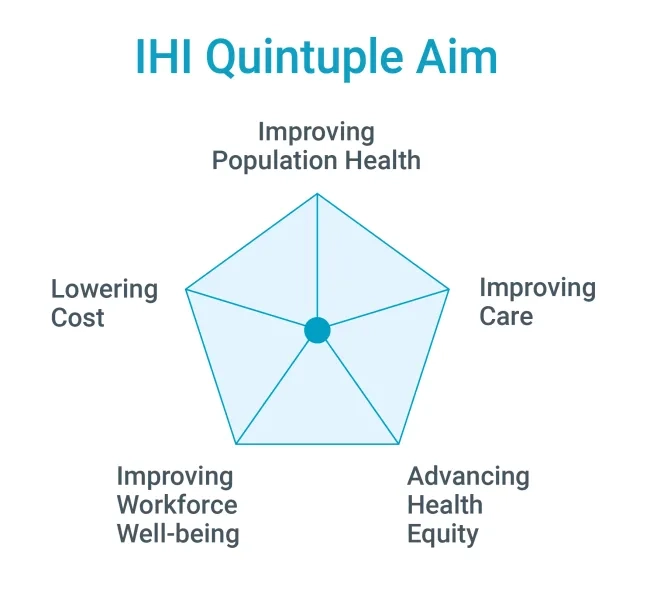
The importance of these level ratings is that they are looking at the maturity of the implementation of the technology and organization’s use of it. Maturity, in this report, doesn’t mean owning more tech — it means using it well, consistently, safely, and in a way that produces results. Every domain describes what ‘grown-up’ behavior looks like considering the 5 pillars of the Institute for Healthcare Improvement’s Quintuple Aim of Health. IHI Quintuple Aim Details
The domains and the barriers to maturity
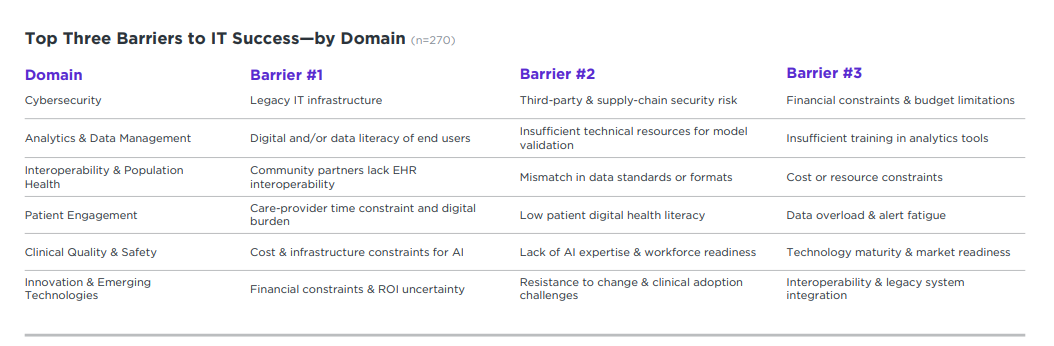
[12:31]Many obstacles to digital maturity are universal across knowledge domains. Some are technical—like integration and interoperability—but most stem from organizational capacity and alignment. Healthcare organizations struggling with integration often face the same barriers in cybersecurity, analytics, and innovation, revealing systemic rather than isolated issues. Limited workforce capacity, low data literacy, and change fatigue routinely slow adoption, even when technology is available. While cost pressures affect everyone, what truly separates high performers is execution—the ability to align people, processes, and data around shared goals. In short, these challenges may appear different by topic but often share a common root: managing fragmented information and processes across interconnected systems, leading to ripple effects throughout the organization.
Simple Maturity Examples by Domain
[22:29]1. Infrastructure
Low maturity: You have the cloud and connected devices, but everything still relies on manual monitoring, annual disaster testing, and single-site backups.
High maturity: Systems automatically detect problems, workloads fail over across regions, and disaster recovery is tested regularly — it’s run like a 24/7 operation, not a once-a-year chore.
Based on hybrid cloud optimization, IoT automation gaps, and DR/testing findings.
2. Cybersecurity
Low maturity: You bought the tools, have a plan on paper, but only test it annually or after an incident.
High maturity: You rehearse your incident response like a fire drill, automate threat detection, and report cyber readiness to leadership regularly.
Reflects findings on IR testing frequency, automated SOC capabilities, and board engagement.
3. Supply Chain
Low maturity: Spreadsheets, manual forecasting, and occasional vendor checks.
High maturity: Predictive analytics automate reordering, vendors are continuously risk-scored, and supply, finance, and clinical systems talk to each other in real time.
Pulled from predictive modeling, vendor risk automation, and cross-system integration data.
4. Administration (Finance, HR, Revenue Cycle)
Low maturity: Manual contract management, disconnected workflows, and AI pilots that don’t scale.
High maturity: Automated spend analytics, contract lifecycle digitalization, and AI tools that deliver measurable improvements in claims, denials, staffing, and flow.
Reflects automation adoption and ROI tracking findings.
5. Analytics & Data Management
Low maturity: Dashboards exist, but data definitions are inconsistent, and AI is deployed without strong validation.
High maturity: Enterprise data governance is in place, data stewards are assigned, AI is evaluated before and after deployment, and models are monitored continuously for drift and bias.
Based on governance, model inventory, and evaluation framework sections.
6. Interoperability & Population Health
Low maturity: You can send data out, but it doesn’t come back in ways that help clinicians — and it’s not in the workflow.
High maturity: External data flows directly into the EHR, clinicians trust and use it, and longitudinal patient records drive real-time risk and care-gap analytics.
Based on workflow integration and bidirectional exchange findings.
7. Patient Engagement
Low maturity: You have a portal and maybe online scheduling, but no one measures outcomes or coordinates governance across departments.
High maturity: Engagement tools are embedded in workflows, governed by a cross-functional committee, and tied to measurable reductions in no-shows, better follow-up, and higher satisfaction.
Directly aligned with governance findings and outcome measurement gaps.
8. Clinical Quality & Safety
Low maturity: Safety reviews happen after events, medication scanning is inconsistent, and clinical AI lacks oversight.
High maturity: Closed-loop medication administration is standard, BCMA compliance is monitored in real time, and AI-driven safety surveillance prevents issues before they occur.
Based on BCMA adoption, real-time monitoring, and automated safety detection sections.
9. Innovation & Emerging Technology
Low maturity: Random pilots, no ROI tracking, and “innovation theater” — cool projects with no plan for scaling.
High maturity: Innovation is governed like a portfolio, evaluated consistently, tied to strategy, and supported by processes that validate AI and emerging tools before deployment.
Reflects innovation program maturity and validation framework findings.
If your IT strategy is “set it and forget it,” you might be stuck in the toddler phase of digital adulting. But don’t worry — there’s hope! As we learned in this episode, reaching high maturity doesn’t mean being perfect; it means having a plan, following through, and maybe testing your disaster recovery plan more than once a year (crazy, we know). Because in a world where tech evolves faster than your EHR can load, staying immature is no longer an option.
Remember to follow us and share us on your favorite social media site. Rate us on your podcasting apps, we need your help to keep spreading the word. As always, send in your questions and ideas!
HIPAA is not about compliance,
it’s about patient care.TM
Special thanks to our sponsors Security First IT and Kardon.


