
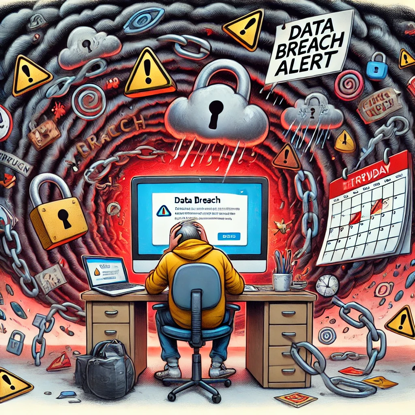
 Navigating the world of cybersecurity these days feels like walking through a minefield with clown shoes—are you stepping safely or just a step away from disaster? In this episode, we dive into the jaw-dropping National Public Data breach that’s got everyone asking, “Am I a victim too?” Spoiler alert: the odds aren’t in your favor. Then, we sift through the chaos of the recent CrowdStrike outage because what’s a week in cybersecurity without a little mayhem? And just when you thought it couldn’t get worse, we’ve got a few more terrifying tales ripped straight from the headlines to keep you on your toes. Grab your stress ball, and let’s brace ourselves for a journey into the digital dark side!
In this episode:
Yes You Are A Victim – Ep 473
Today’s Episode is brought to you by:
Kardon
and
HIPAA for MSPs with Security First IT
Subscribe on Apple Podcast. Share us on Social Media. Rate us wherever you find the opportunity.
Great idea! Share Help Me With HIPAA with one person this week!
Learn about offerings from the Kardon Club
and HIPAA for MSPs!
Thanks to our donors. We appreciate your support!
If you would like to donate to the cause you can do that at HelpMeWithHIPAA.com
Like us and leave a review on our Facebook page: www.Facebook.com/HelpMeWithHIPAA
If you see a couple of numbers on the left side you can click that and go directly to that part of the audio. Get the best of both worlds from the show notes to the audio and back!
Thanks to our donors.
Yes You Are A Victim
[03:30]In episode 471 on 8/16, we discussed the National Public Data breach. The fallout from this has not cooled down and probably will not for a while, due to the sheer size of this massive breach. It is probably safe to assume that you got caught up in this breach.
However, instead of assuming, the folks over at Pentester.com have created a search tool to check for yourself: Pentester.com (npd.pentester.com)
So, what action should you take next? It is recommended that you freeze or lock your credit, which experts consider the strongest protection from criminals accessing your credit without permission. You’ll need to go to the three credit reporting agencies and freeze/lock your credit. Unfortunately, they don’t make this super simple, so we’ll include links directly to the page you’ll need to go to.
Just watch out for the services they will try to sell you. You do not need to pay anything to freeze your credit. You also do not need to pay for a credit report. Check the detailed information on your credit reports. You can get free weekly credit reports from the three major credit reporting agencies — Equifax, Experian and TransUnion using annualcreditreport.com. If you find an error on any report, dispute it.
It is a good idea to keep track of your credit reports. If you want to pay for monitoring services, there are a number of those available. A little trick is to sign up for a service from a personal finance website or your credit card company that offers free credit scores.
Credit monitoring services often market themselves as safeguards of your credit profile. But that’s not quite the case.
Here’s what even the best credit monitoring companies can’t do:
- They can’t prevent identity theft or credit card fraud.
- They can’t keep you from receiving phishing emails — or from opening them.
- They can’t keep someone from applying for credit in your name.
- They won’t correct errors on your credit report.
- They won’t stop taxpayer identity theft.
National Public Data Published Its Own Passwords – Krebs on Security
Updates on Crowdstrike
[24:46]- A program asked for the 21st value in a list that only had 20 values which caused it to say you are out of bounds and shut down all kinds of thinking from that point forward. The system just crashed.
- There are new options from Microsoft that will let them use other security functions so they don’t have to use this part of the boot process any longer. They plan to make changes to use the new things and reduce the use of these methods.
- They are working with MS on an “ongoing” basis to add more support for security product needs in the safer part of Windows called the userspace.
- They have hired 2 3rd party software security vendors to conduct independent reviews of the end-to-end quality process of the whole development to deployment process. Specifically following what happened with this one case to correct what caused it.
- They are still fighting with Delta over blame for their mess. Delta threatened to sue them over $500m in lost revenue and costs.
But wait, there’s more!
[35:43]Mobile device management vendor Mobile Guardian attacked • The Register
New Warning As ‘Spike’ In GPS Spoofing Attacks Hit Passenger Planes—Fasten Your Seatbelts
Microsoft’s AI Can Be Turned Into an Automated Phishing Machine | WIRED
And there you have it—another week, another set of reasons to double-check your passwords and keep a close eye on your credit report. From the National Public Data breach exposing just about everything to CrowdStrike’s unplanned adventures in system downtime, it’s clear that in the world of cybersecurity, there’s never a dull moment. Remember, staying safe online is like playing an endless game of digital whack-a-mole—just when you think you’ve nailed it, another threat pops up! So, keep those passwords strong, keep an eye on your credit reports, and don’t fall for those sneaky phishing emails.
Remember to follow us and share us on your favorite social media site. Rate us on your podcasting apps, we need your help to keep spreading the word. As always, send in your questions and ideas!
HIPAA is not about compliance,
it’s about patient care.TM
Special thanks to our sponsors Security First IT and Kardon.


