
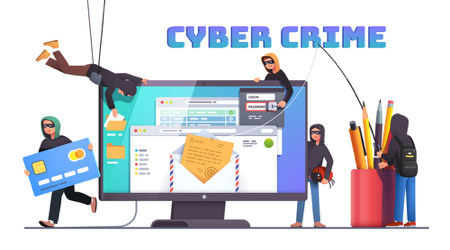
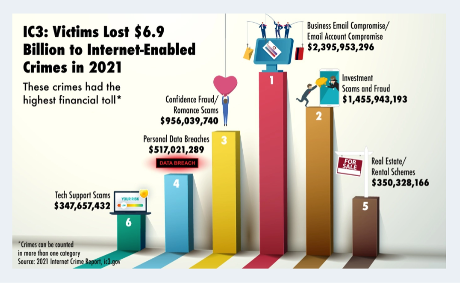
Cybercrime is a booming business. In 2021, the US experienced an unprecedented increase in cyber attacks with criminals making $6.9 billion online. In today’s podcast, we review the FBI’s Internet Crime Report for 2021.
In this episode:
6 Ways To Make Money Online – Ep 352
Today’s Episode is brought to you by:
Kardon
and
HIPAA for MSPs with Security First IT
Subscribe on Apple Podcast. Share us on Social Media. Rate us wherever you find the opportunity.
The Privacy and Security Boot Camp
3.5 day In Person Event
Sep 12, 13, 14 and 15
PriSecBootCamp.com
Great idea! Share Help Me With HIPAA with one person this week!
Learn about offerings from the Kardon Club
and HIPAA for MSPs!
Thanks to our donors. We appreciate your support!
If you would like to donate to the cause you can do that at HelpMeWithHIPAA.com
Like us and leave a review on our Facebook page: www.Facebook.com/HelpMeWithHIPAA
If you see a couple of numbers on the left side you can click that and go directly to that part of the audio. Get the best of both worlds from the show notes to the audio and back!
405(d) Tip of the Week
[02:53] 10 Best Practices: #1 Email Protection Systems
The two most common phishing methods occur by email access:
- Credential theft is where attackers leverage emails to conduct credential harvesting attacks on the organization.
- Malware dropper attacks are used when attackers deliver malware through emails, which can compromise endpoints.
An organization’s cybersecurity practices must address these two attack vectors. Because both attack types leverage e-mail, e-mail systems should be the focus for additional security controls.
For Small Organizations:
- Instill basic email protection controls such as standard antispam and antivirus (AV) filtering controls, which should be implemented in any e-mail system.
- Acquire Multifactor Authentication (MFA) for remote email access, which is the process of verifying a user’s identity using more than one credential, thus adding an extra layer of defense against email attacks.
- Implement education and awareness activities such as training, phishing simulations, and awareness campaigns to assist employees and partners in protecting your organization against phishing attacks.
For Medium & Larger Organizations:
In addition to the items mentioned above for small organizations, medium and large organizations should do the following:
- Institute basic email controls including real-time black hole lists, distributed checksum clearinghouses (DCCs), and spam/virus checks on outbound messages.
- Utilize advanced and next generation tooling to combat phishing and malware. These tools use threat analytics and real-time response capabilities to provide protection against phishing attacks and malware.
- Perform analytical education by reviewing who in your organization is being targeted most and create cyber security education specifically for that group.
6 Ways To Make Money Online
[09:37] FBI Releases the Internet Crime Complaint Center 2021 Internet Crime Report
The FBI’s 2021 INTERNET CRIME REPORT includes information from over 800,000 complaints of suspected internet crime and reported losses from cyber attacks. They have also released state specific statistics on cyber crime. The report shows that phishing scams, non-payment/non-delivery scams, and personal data breach were the top three cyber crimes reported by victims in 2021.
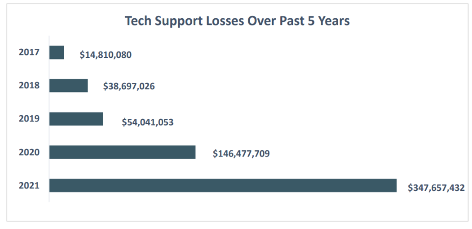
Tech Support Scams On The Rise
[19:23] One of the most common scams, that David has noticed with his clients, are the “Microsoft” pop ups that say there is a problem with the computer and to call this number to get it fixed. He sees these mostly coming from hacked websites and malicious Chrome extensions. Some anti-malware programs don’t do a good job of looking at browser extensions. So, ask your IT if their tools evaluate browser extensions or just get rid of non-essential extensions altogether.
The Phishing / Vishing / Smishing / Pharming cybercrime type, by far, accounts for most of the victims. These are all communication type scams.
Cybercrime is big business. The scary thing is that it is easy to do nowadays. Hackers don’t have to be programmers or have advanced technical expertise to participate in cybercrime. Cybercrime has its own business model and criminals are making it easier for people to subscribe to their tools and platforms. So, needless to say cyber attacks are not going away or becoming less frequent any time soon.
Remember to follow us and share us on your favorite social media site. Rate us on your podcasting apps, we need your help to keep spreading the word. As always, send in your questions and ideas!
HIPAA is not about compliance,
it’s about patient care.TM
Special thanks to our sponsors Security First IT and Kardon.


